
 SAM
SAM=Navigation%20(Current)12-2.png?width=17&height=17&name=Navigation%20(Current)=Navigation%20(Current)12-2.png) Maintenance
Maintenance =Navigation%20(Current)12-3.png?width=17&height=17&name=Navigation%20(Current)=Navigation%20(Current)12-3.png) Capital
Capital  About us
  Contact Us
  Careers
  Customer Success Stories
=Navigation%20(Current)12-4.png?width=17&height=17&name=Navigation%20(Current)=Navigation%20(Current)12-4.png) SuiteSpot Accelerate™
SuiteSpot Accelerate™ Newsroom
 Integrations
 Resource Centre
 FAQ
FAQ Request a Demo
=Navigation%20(Current)12-1.png?width=17&height=17&name=Navigation%20(Current)=Navigation%20(Current)12-1.png) SAM™ Maintenance Request
SAM™ Maintenance Request SAM™ Supervisor
=Navigation%20(Current)12.png?width=17&height=17&name=Navigation%20(Current)=Navigation%20(Current)12.png) SAM™ Technician
SAM™ Technician SAM™ Capital Manager
Overview
Multifamily maintenance software is a purpose built platform for managing maintenance across apartment communities. It connects resident requests, work orders, technicians, vendors, unit turns, inspections, assets, communication, and reporting in one operational system.
Basic work order software records tasks. Multifamily maintenance software coordinates the people, information, and decisions required to complete those tasks across a portfolio.
That distinction becomes more important as operators grow. Spreadsheets, phone calls, emails, and disconnected property management tools may work at a small scale. Across thousands of units, they create delays, inconsistent processes, and limited visibility.
A modern maintenance platform gives operators a clearer view of the work and a better way to manage what happens next.
How Multifamily Maintenance Software Works
Every maintenance request starts a process.
The issue must be understood, prioritized, assigned, scheduled, completed, documented, and communicated back to the resident. A strong platform connects each step so information does not get lost between teams or systems.
Consider a resident reporting a leaking sink. The software can capture the details, determine the priority, create the work order, assign a technician, share access instructions, track the repair, and update the resident.
If the same fixture has failed several times, its repair history can help the technician or supervisor decide whether another repair makes sense or replacement is the better option.
The result is a complete operational record, not a collection of disconnected tasks.
What Does Multifamily Maintenance Software Manage?
1. Resident maintenance requests
Good maintenance begins with accurate information.
Residents should be able to report issues through convenient channels such as phone, chat, web, or mobile. The system should collect enough detail to create an actionable request, identify possible emergencies, capture access preferences, and keep the resident informed.
AI can strengthen this process by asking follow up questions, providing safe mitigation guidance, creating the work order, and escalating situations that need human attention.
2. Work orders and technicians
Work order management is the operational core of the platform.
Technicians should be able to see the issue, resident availability, access details, previous repairs, asset history, photos, and required documentation from a mobile device.
Supervisors should be able to see open work, assignments, backlogs, delays, and exceptions without relying on calls, texts, or manual reports.
The goal is simple: more time completing work and less time coordinating it.
3. Workforce and vendor coordination
Multifamily operators often use a mix of property technicians, centralized teams, regional specialists, mobile resources, and vendors.
Maintenance software should help assign work based on skills, location, urgency, availability, workload, and operating rules. Internal teams and vendors should work through consistent processes, with clear accountability for timing, cost, documentation, and quality.
4. Unit turns and make ready
A unit turn is not one work order. It is a sequence of connected tasks with a financial deadline.
Inspections, repairs, cleaning, painting, flooring, appliances, vendors, approvals, and quality checks may all need to be completed before the unit can return to market.
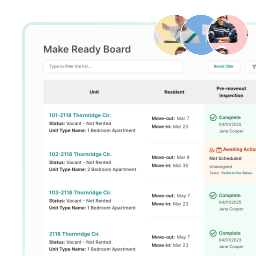
Multifamily maintenance software gives teams one view of the full turn. Operators can see what is complete, what is delayed, who owns the next step, and whether the expected ready date is at risk.
5. Inspections, preventive maintenance, and assets
Inspections are only valuable when findings lead to action.
The platform should make it easy to schedule recurring work, document inspection results, create follow up tasks, and monitor completion across the portfolio.
Asset records add important context. Age, warranty status, repair history, inspection records, and cumulative cost can support better repair or replace decisions and help operators identify recurring problems across properties.
Why Basic Work Order Software Is Not Enough
A basic work order system can show that a task is open or closed. It may not explain why the work is delayed, what happened previously, or what action is required next.
Maintenance rarely follows a perfect process. A part may be unavailable. The resident may not provide access. A technician may need approval or vendor support. A completed request may reopen because the underlying problem was not resolved.
When that context lives in texts, emails, and individual memory, supervisors and property teams lose visibility.
Purpose built multifamily maintenance software keeps that information connected to the work. This allows operators to move beyond tracking activity and begin improving performance.
Multifamily Maintenance Software vs. Property Management Software
A property management system usually serves as the system of record for properties, units, residents, leases, and financial transactions.
Multifamily maintenance software provides the operational layer for executing maintenance work.
The two systems should integrate. Property and resident information can flow into the maintenance platform, while completed work and relevant updates remain synchronized.
The property management system holds the record. The maintenance platform drives the action.
How Maintenance Software Improves Performance
The value of maintenance software is not measured by how many work orders it stores. It is measured by how well it helps teams operate.
For technicians, it should provide better information and reduce administrative work.
For supervisors, it should make workloads, delays, repeat issues, and exceptions easier to identify.
For property teams, it should improve coordination and resident communication.
For leadership, it should create a consistent view of maintenance performance across every property and region.
Strong reporting should also connect KPIs to the workflows behind them. If completion times increase, operators should be able to determine whether the cause is staffing, assignment delays, parts, vendors, access, or repeat repairs.
A dashboard shows what happened. A connected platform helps explain why.
The Role of AI in Multifamily Maintenance
The most important question is not whether a platform has AI. It is whether the AI can perform useful work inside the maintenance process.
An AI maintenance agent can handle resident calls and chats, gather missing details, identify emergencies, create work orders, provide updates, surface repeat issues, and escalate exceptions.
To do that effectively, it needs access to the operator’s properties, residents, assets, work history, business rules, and escalation requirements.
AI does not replace technicians or experienced maintenance leaders. It reduces the coordination and administrative work surrounding them.
What Should Operators Look For?
When evaluating multifamily maintenance software, operators should ask whether the platform can:
1. Manage the full maintenance lifecycle in one connected system
2. Support technicians, centralized teams, regional resources, and vendors
3. Standardize workflows while allowing property level flexibility
4. Manage unit turns as complete processes
5. Connect reporting to the work behind each KPI
6. Integrate with the existing property management system
7. Meet enterprise requirements for security, governance, and scale
8. Use AI to perform operational work, not simply summarize information
The best platform is not the one with the longest feature list. It is the one that best supports how the operator wants maintenance to work.
How SuiteSpot Approaches Multifamily Maintenance
SuiteSpot is an AI powered multifamily maintenance platform built to connect the full maintenance lifecycle.
It brings together resident requests, work orders, workforce management, unit turns, inspections, preventive maintenance, vendors, assets, compliance, procurement, communication, and reporting.
SuiteSpot also brings specialized AI agents directly into these workflows. This allows AI to manage routine coordination while technicians, supervisors, and property teams focus on work that requires their experience and judgment.
The result is more than a digital maintenance record. It is a system of action for managing maintenance across every team, workflow, and property.
Frequently Asked Questions
What is multifamily maintenance software?
Multifamily maintenance software is a purpose built platform for managing maintenance across apartment communities. It connects resident requests, work orders, technicians, vendors, unit turns, inspections, assets, preventive maintenance, communication, and portfolio reporting in one system.
What is the best maintenance software for multifamily properties?
The best maintenance software for multifamily properties gives operators control over the full maintenance lifecycle. It should support portfolio wide workflows, mobile technicians, resident communication, unit turns, asset history, reporting, integrations, and AI powered automation without adding unnecessary administrative work.
How is multifamily maintenance software different from work order software?
Work order software primarily creates, assigns, and tracks individual tasks. Multifamily maintenance software manages the wider operation around those tasks, including resident intake, workforce coordination, unit turns, inspections, vendors, assets, communication, compliance, and performance reporting.
How is maintenance software different from a property management system?
A property management system typically stores core property, resident, lease, and financial information. Property management maintenance software provides deeper workflows for executing maintenance work. Platforms such as SuiteSpot integrate with the property management system while serving as the operational system for maintenance teams.
What features should apartment maintenance software include?
Apartment maintenance software should include resident request intake, work order management, technician scheduling, mobile workflows, vendor management, unit turns, inspections, preventive maintenance, asset tracking, resident updates, reporting, and integrations with the operator’s existing technology stack.
Can multifamily maintenance software manage unit turns and make ready work?
Yes. Unit turn software should coordinate inspections, repairs, cleaning, painting, flooring, appliances, vendors, approvals, deadlines, and quality checks within one connected workflow. This helps operators identify delays sooner and reduce the vacancy loss caused by slow turns.
Can AI handle apartment maintenance requests?
Yes. An AI maintenance agent can answer resident calls or chats, ask follow up questions, identify emergencies, provide safe mitigation guidance, create work orders, send updates, and escalate situations that require human attention. SuiteSpot uses specialized AI agents within the broader maintenance workflow rather than as a separate chatbot.
How does multifamily maintenance software improve technician productivity?
Multifamily maintenance software gives technicians the information they need before arriving at the job, including access instructions, repair history, asset details, photos, and required steps. Mobile workflows also reduce calls, duplicate entry, and paperwork, allowing technicians to spend more time completing repairs.
Does multifamily maintenance software support preventive maintenance and asset management?
Yes. A complete platform can schedule recurring maintenance, document inspections, create follow up work, track warranties, preserve asset history, and support repair or replace decisions. This helps operators prevent avoidable failures and understand where maintenance spending is going.
Can multifamily maintenance software support large portfolios and centralized teams?
Yes. Enterprise multifamily maintenance software should support multiple properties, regions, staffing models, vendors, permissions, and operating standards. SuiteSpot is designed to help operators coordinate property teams, mobile technicians, centralized resources, and portfolio reporting within one connected system.
Faster Turns. Smarter Work.
See How SuiteSpot Can Streamline Your Maintenance
 Book a Demo
Blog
Resource library
Subscribe to learn about new product features, the latest in technology, solutions, and updates.