
 SAM
SAM=Navigation%20(Current)12-2.png?width=17&height=17&name=Navigation%20(Current)=Navigation%20(Current)12-2.png) Maintenance
Maintenance =Navigation%20(Current)12-3.png?width=17&height=17&name=Navigation%20(Current)=Navigation%20(Current)12-3.png) Capital
Capital  About us
  Contact Us
  Careers
  Customer Success Stories
=Navigation%20(Current)12-4.png?width=17&height=17&name=Navigation%20(Current)=Navigation%20(Current)12-4.png) SuiteSpot Accelerate™
SuiteSpot Accelerate™ Newsroom
 Integrations
 Resource Centre
 FAQ
FAQ Request a Demo
=Navigation%20(Current)12-1.png?width=17&height=17&name=Navigation%20(Current)=Navigation%20(Current)12-1.png) SAM™ Maintenance Request
SAM™ Maintenance Request SAM™ Supervisor
=Navigation%20(Current)12.png?width=17&height=17&name=Navigation%20(Current)=Navigation%20(Current)12.png) SAM™ Technician
SAM™ Technician SAM™ Capital Manager
The Cost of Slow Unit Turns: Where Vacancy Loss Comes From
Overview
Slow unit turns cost more than maintenance labor. Each additional day can delay available inventory, move in revenue, leasing commitments, and the property’s ability to respond to demand. The cost is easy to describe and harder to diagnose because vacancy loss rarely comes from one dramatic failure. It accumulates through small delays across the process.
The Turn Starts Too Late
A unit may be known to be vacating weeks before move out, yet inspection planning, vendor scheduling, and material preparation begin only after keys are returned. That delay may never appear in a work order metric because no task was technically late. The operation simply failed to use the available lead time.
Scope Takes Too Long to Finalize
Inspection findings may be copied into emails, spreadsheets, estimates, and work orders. Questions about resident responsibility, replacement, pricing, or approval can hold the unit before physical work begins. A connected scope process reduces those handoffs and makes unresolved decisions visible.
Work Waits Between Trades
The repair itself may be completed on time while the unit waits for the next trade. Paint, flooring, cleaning, appliances, vendors, and quality checks can create gaps if dependencies are not sequenced and accepted in advance. Calendar time is lost between tasks even when every individual task appears reasonable.
Approval Delays Hide Their True Cost
An approval may be reviewed only as a maintenance expense. The cost of the delayed ready date is often invisible. Operators should make both values available: the amount under review and the vacancy exposure created by waiting.
Vendor Capacity Is Assumed
A preferred vendor may not have the capacity to meet every turn date. Without acceptance, lead time, and performance visibility, teams discover the conflict after the unit is already on the critical path.
Rework Resets the Clock
A failed quality check, incomplete repair, missed scope item, or damage caused by a later trade can send work backward. Speed without a clear quality standard creates the appearance of progress and the reality of another delay.
The Unit Is Ready but Not Released
Physical work may be complete while the unit waits for a final inspection, documentation, key update, system status, or leasing confirmation. Operators should measure the time between work completion and official readiness. It is often a distinct process problem.
Calculate the Exposure
A simple starting point is daily scheduled rent multiplied by the number of avoidable days. The fuller calculation can include concessions, rescheduling, vendor premiums, overtime, additional inspections, and administrative effort. A fair vacancy analysis isolates the days the operating process could have prevented.
Manage the Causes, Not the Average
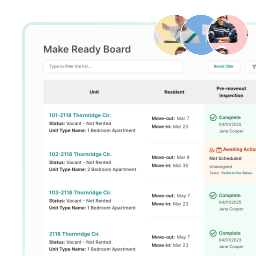
A portfolio average turn time does not show where loss occurs. Break the process into notice lead time, start delay, active work, waiting, rework, final inspection, and leasing handoff. SuiteSpot connects each stage so operators can see the unit, the delay, the owner, and the financial risk in the same workflow.
Calculate the daily rental value of preventable turn delays across your portfolio.
Faster Turns. Smarter Work.
See How SuiteSpot Can Streamline Your Maintenance
 Book a Demo
Blog
Resource library
Subscribe to learn about new product features, the latest in technology, solutions, and updates.